HR is Due for an Evolution.
Let's talk about workforce transformation.

Today is Day 1 for me!
This newsletter is landing in your inbox on the same morning I’m walking in for my first day at IBR as Director of Workforce Transformation.
I’m excited for a lot, but really excited for that title. Workforce Transformation.
Let’s talk about what workforce transformation means, unpack some key insights from the CEO of SHRM at SHRM Orlando last week, and where we think the future of work is going in the age of AI.
✨ AI Tip of the Week
Use AI to map your work and better see your actual role.
Most job descriptions are aspirational marketing. Most org charts are political artifacts. Neither one will tell you what you actually do during a week of work. And if you can’t see what you actually do, you can’t redesign it.
Pull up your last week (calendar, email threads, what you produced) and ask AI to help you sort it.
Try this prompt:
Here are the things I did at work this week: [paste list]. Categorize each one: pure execution, judgment, creating new options, coordinating between people, status reporting, or something else. Tell me what this distribution actually shows about how my role is structured, and what the work IS, regardless of what my job description says.
Run this for a few weeks and you’ll start to see your role honestly. Some of what you’ll see will be annoying and uncomfortable (as all of us have been when we’ve joined a transformational organization and been relegated to “safe” work). Some of it will give you permission to redesign your job description.
Now let’s decode the future of work. 🚀
The Pending Evolution of HR

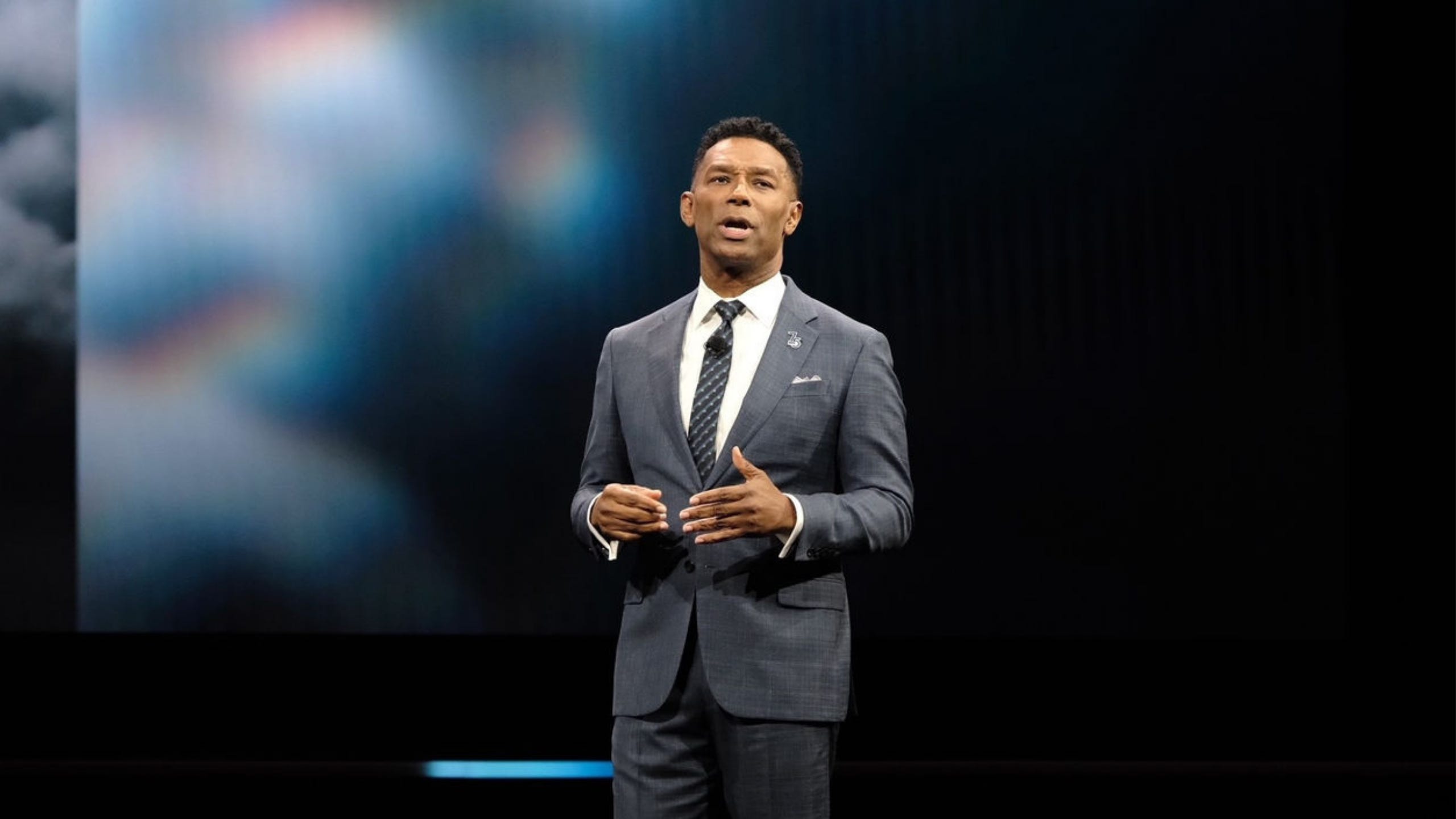
Last week, in Orlando, Johnny C. Taylor Jr., CEO of SHRM, opened SHRM26 with a keynote called Taking Back HR. His argument: as technology and economic shifts reshape work itself, HR has to step forward and reclaim its place as something totally new, something like the Chief Work Officer, leading how work gets done and who does it, not just managing the people who do it.
He’s right.
Much of the work that used to be inside HR, like talent acquisition, learning, analytics, compensation strategy, has been quietly siphoned off into other parts of the organization for the better part of a decade. Recruiting moved into TA Centers of Excellence. Learning moved into Operations or Strategy. Analytics moved into wherever the data lived, and often under the purview of the CDO/CIO/CDAO/CD-EIEIO? So many. There’s a huge argument right now about where AI expertise should live (oh, do I have opinions on that). And HR, in many organizations, was left holding the compliance bag and being asked why it wasn’t more strategic.
Taylor is right that this can’t continue. He’s right that HR has to step up. He’s right that the future-state job is bigger than the present-state job.
I’d add one word to the framing.
We’re not taking HR back. I’d argue we don’t want it back.
We want to evolve it forward.
“Taking back” implies HR used to be somewhere it should return to. It implies the version of HR that existed in 2010, or 2005, or 1995, was the version we want, and the job now is to reclaim that ground.
I don’t think that’s right.
The work hasn’t flowed out because HR failed, per se, but because the work was changing and the work got aligned to where the change was happening. Strategy. Operations. Its own COE. Work is changing at an incredible pace right now, and the boundaries of who owns what slice of the enterprise need to change with it.
I feel like this is incredibly true in the Department of War right now. In a class I was giving to a number of flag and general officers as well as senior executives, one of the GOs asked me if we should be reworking the Napoleonic structure in which our staffs operate (see Page 14 here for an overview of the organization - and the whole article for a look at how agentic operations are changing modern warfare). I think it absolutely should, because the way we work is fundamentally different than it was in the days of Napoleon’s Grand Armée. The same goes for modern business.
What’s missing in 2026 isn’t needing to reclaim or return to a new shape of HR, it’s figuring out what the new shape is for managing work—and figuring out who in the organization needs to be the expert on it.
I think about the work we have to do in the HR space in three pillars right now. Let me break it down. See if you agree or if I’m missing anything.
Pillar 1: Work expertise
For most of the profession’s history, HR’s expertise was in the people side of work, like selection, motivation, development, compensation, conflict, exit. The work itself was somebody else’s problem. Operations owned the work, and HR owned the workers. That split, both in the military and in business, has made things more and more complicated—and then we add AI into the mix.
When AI takes a meaningful share of the cognitive work that used to belong to people, you can’t redesign the workforce without redesigning the work.
The decisions about which tasks stay with humans, which move to machines, which become new categories that didn’t exist before, are not fundamentally HR decisions, nor are they IT decisions. They’re decisions about the work, and they require a function that owns the work as a unit of analysis.
Workforce Transformation, the way I think about it, is that function. It looks at the work—actual work, not job descriptions—and asks how to design it, who does it, what they need, and what changes when the AI is in the mix.
Pillar 2: Blend AI and HI
We’ve spent the last two years talking about AI as if it were a major independent player, when it really should be part of the overall workflow. AI is good at pattern, scale, recall, and certain kinds of synthesis. It is not good at judgment under ambiguity, original strategic framing, building trust with another human under stress, or knowing when to break the rule (well, yet—it gets better and better by the minute).
HI—human intelligence—is good at all of those things, but our human workforce, if not limited by capability, is limited by capacity (the two things I used to decide if I was going to outsource work to industry partners—although now, I will outsource capability we don’t have to partners, capacity we don’t have to AI).
I see our work in Workforce Transformation as designing work so that the blend of AI and HI produces something neither half could produce alone. Not “AI replaces humans.” Not “humans use AI as a tool.” Something that resembles what we’ve been chasing in the I/O spaces for years—actual human-machine teaming.
That requires a function that understands both halves of the equation deeply enough to design the seam between them. You need a function that is both HR-fluent and AI-fluent so that you can become work-fluent. It’s a different talent profile than the traditional HR career arc produces. That’s a problem we’re going to have to get after in the people space, and one I expect to be writing about quite a bit going forward.
Pillar 3: Prove the impact in concrete terms
The thing every HR function I’ve worked with has struggled with, even the good ones, is proving the business impact of what they do in terms the CFO accepts at face value.
The traditional answer has been engagement scores, retention rates, and time-to-fill. Those are not bad metrics. They’re not adequate, either. They measure HR’s outputs, not its outcomes. (See last week’s AI Maturity Matrix for why that distinction matters.)
Workforce Transformation has to look at whether the work is getting done better, faster, cheaper, or more wisely. The metrics have to be about decisions, outcomes, and capability, not headcount and engagement.
This is hard work, but if we can’t prove the impact of humans and human-machine teams in concrete terms, then the workforce decisions get made by people who can prove their numbers…like finance, operations, engineering.
That was the biggest problem the Army faced in the HR space when I retired, and something I imagine the other services (and many other organizations) are struggling with. And they’re getting left with decisions that optimize for productivity at the expense of capability—the kind of decisions a lot of our industry partners have made that have resulted in them having to hire a lot of capability back, as you’ve likely seen in the news recently.
My goal is for workforce transformation to be the thing that fixes this.
Why we need new structure
I’ve seen the establishment of enough new organizations, offices, and positions during different government transformation offices to know that everybody gets up and argues for their office or position, has their talking points, has their messages, etc. But I’ve also stood up enough new ones—and stood down the ones that were no longer relevant—that I feel comfortable in saying two things about workforce transformation:
The work is desperately needed, when we are trying to wrangle whole new ways to work;
This isn’t a new office, it’s an evolved HR office, which should signal our commitment to not just establish new offices but transform.
I’m the senior executive in my organization responsible for evolving how our company does the work that meets our CEO’s goals—through people, through technology, through human-machine teams, through redesigning the work itself.
I feel like this is the work that Johnny Taylor is pointing at when he names the Chief Work Officer. We just got a little ahead of the keynote 😁
Not every company or organization needs the exact same role or title, but what I will say is that the traditional way we looked at people must evolve. We think we’ve got a good model. But this is also just Day 1, so stay tuned.
Why I chose IBR to work on this problem set
I chose to take on this position at IBR even before we landed on Workforce Transformation as the title for several reasons.
For one, it’s the right blend of small business and established player. I love the combination of rapid growth and start-up vibes.
Two, the CEO and CTO gave me the opportunity to lead change both within the company and with our federal clients, which is the kind of intrapreneurial innovation I absolutely love to do (and have a proven track record with).
Three, the company is full of creative technologists. The ideas and energy in this crew and the ability to move fast with good tech are amazing!
Four, culture matters. One of the things I asked in job discussions is who brings forward the ideas in the company—and that’s a question where the wrong answer will make me stand up, thank someone for their time, and exit stage left. IBR has a culture that empowers its people in terrific ways.
And finally…it lets me keep helping federal. Not for comfort or familiarity, but for level of potential impact.
That last piece is important to me. The federal workforce is under enormous pressure right now between a very real mission, significant constraints, absolute disruption, and a historically significant amount of under-resourcing. The stakes are real, but the existing HR functions inside most federal agencies is not by any honest measure equipped or empowered to lead the workforce evolution we need. And I don’t mean that as a criticism of the people inside those functions—they’re exhausted, under-resourced, and asked to do reform work on top of the compliance work, tons of pop-up meetings, and whack-a-mole tasks that consume their time and energy.
I watched this happen in the Army and the DoW. Smart, capable people in HR functions warned me again and again, in each start-up function I led, that all of these “big ideas” were going to take a back-seat to the day-to-day work just because there were never enough people, enough resources, enough time to do even the work needed to free up time.
What we’re building is the talent and toolset needed to go from transactional HR practices that something that looks more like the AI-enabled strategic HR professional outlined here. Workforce design, AI integration, capability building, measurement, and organizational change management and upskilling to go with it.
It’s super exciting stuff, and if you know me, you get the fit.
So what’s next?
Let me recap—here’s you’re tl;dr:
HR needs to evolve, not return to a previous shape.
The evolution is about the work itself becoming the unit of analysis.
The new posture has three pillars: experts on the work, blend of AI and HI, concrete proof of impact.
I feel like Workforce Transformation is a deliberate signal of how we’re blending human and machine work, and what expertise is needed for this evolution.
We’re building this capability, and it’s exciting!
Johnny Taylor is right that the moment is here, but we shouldn’t be looking to take anything back—we should be looking to evolve forward, to build, to grow.
I’m excited about what we can build, and if you are, too, keep following along here, and jump in on the discussion! I’d love to hear what you think!