
eMerge Americas: Innovation Has a Home Base and It's Not Where You Think
Why Florida is leading the national conversation on technology, national security, and the future of innovation, and why that surprises exactly nobody who's been paying attention.

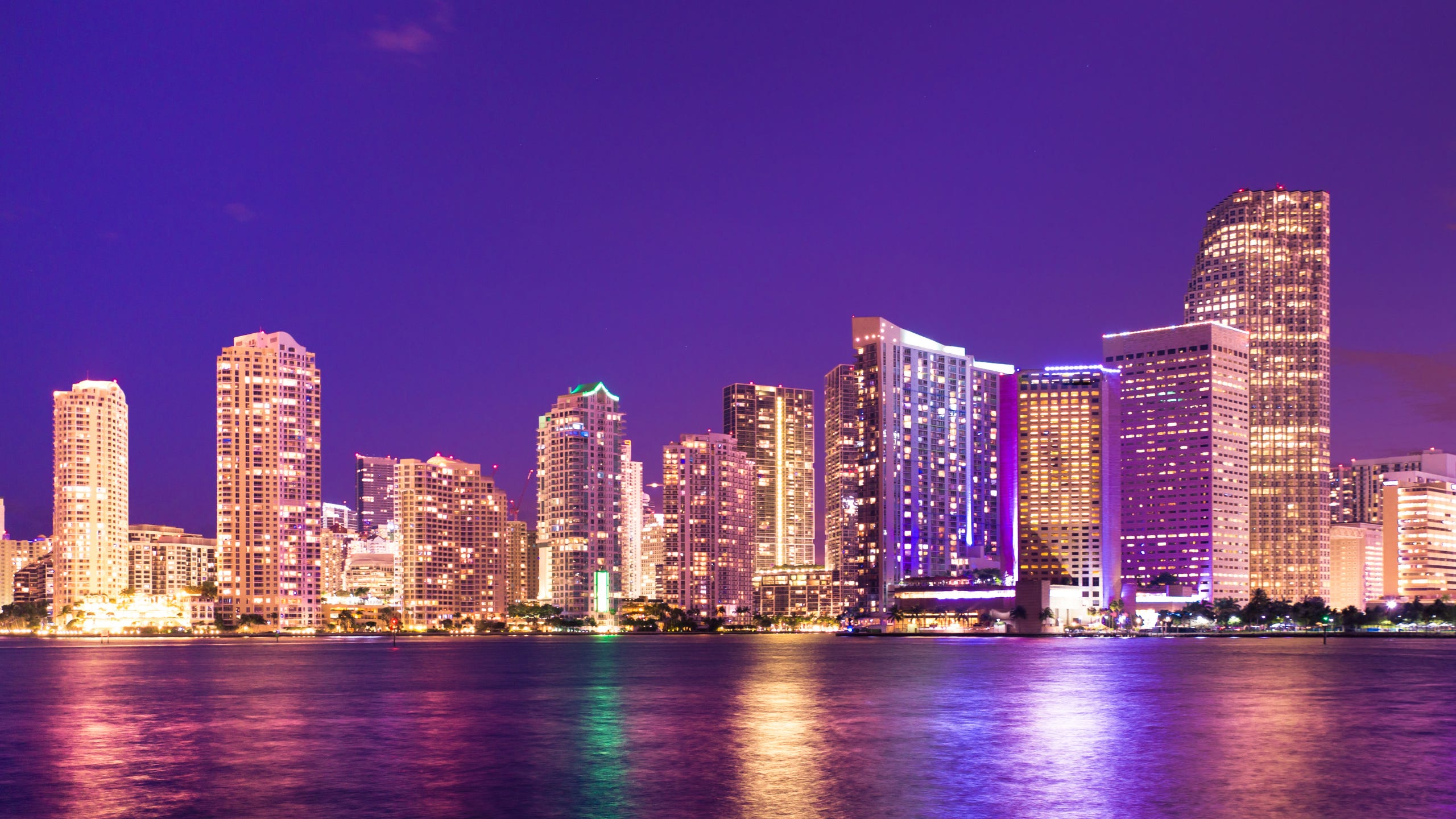
This week is the eMerge Americas conference, where 25,000 leaders in industry and policy for AI, fintech, medtech, robotics, and more, from all over the world, will converge on Miami for a couple days of education, collaboration, and innovation!
I’ve been to eMerge Americas the last few years as a speaker and a panelist, in its rooms as a participant, and on its floors talking to the most interesting collection of innovators, investors, technologists, defense leaders, national security policy makers, and builders you’re likely to find at any single conference on the calendar.
This year, I’m doing something new. I’ll be emceeing on the national security stage.
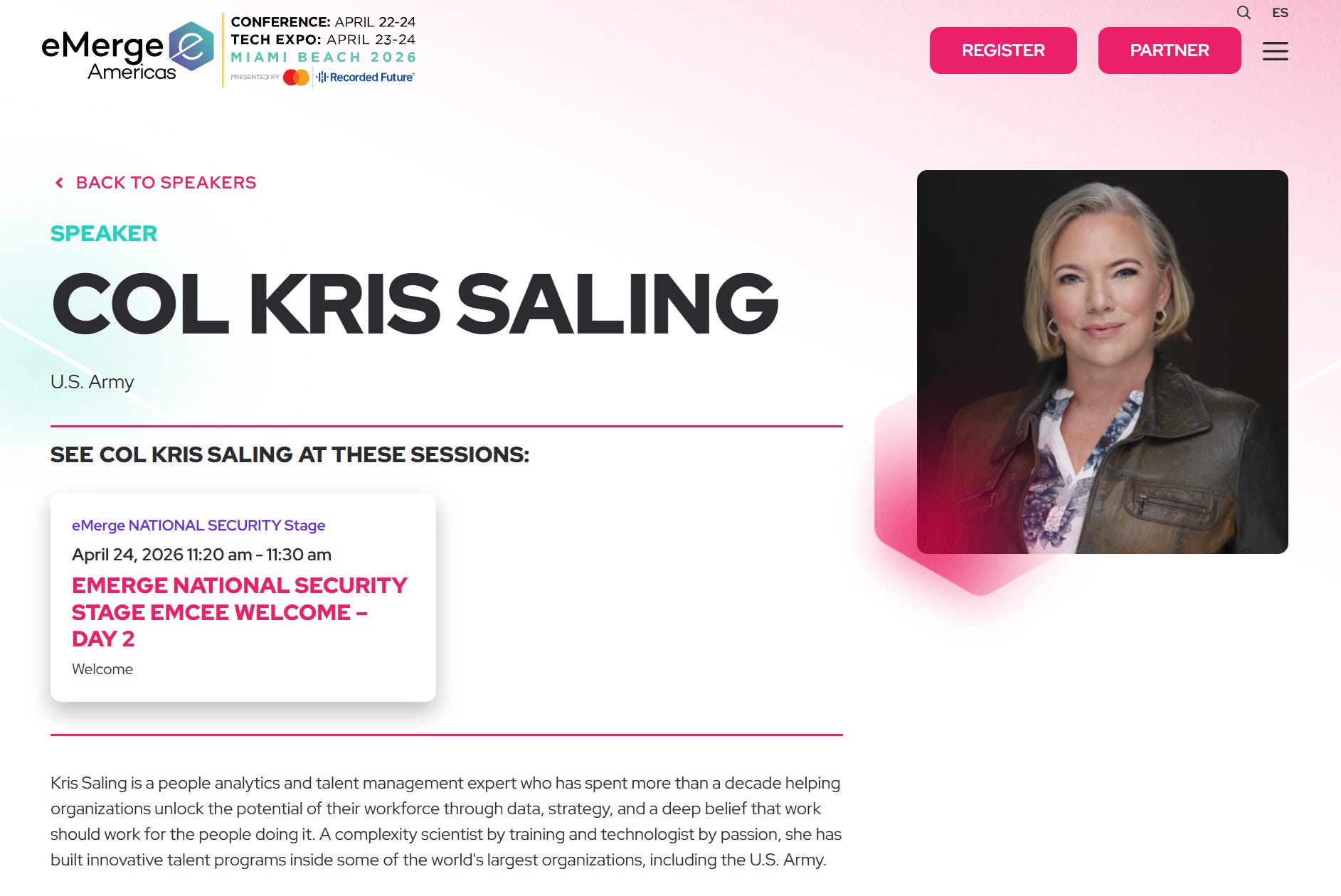
The NatSec stage, eMerge, and all these important conversations happening down here in Miami are super important, not just to me but for our national focus.
The short version: Florida is not where you go to escape the serious conversations. It’s not just spring break and theme parks. Florida is where serious tech, innovation, finance, and national security conversations are going on, and where true change-making is happening. Where Wall Street and Silicon Valley are converging on locales with ingredients truly unique to Florida—and vital for innovation to flourish.
Let’s decode it. 🚀
The Conference You Should Know About
eMerge Americas, April 23–24, Miami Beach Convention Center
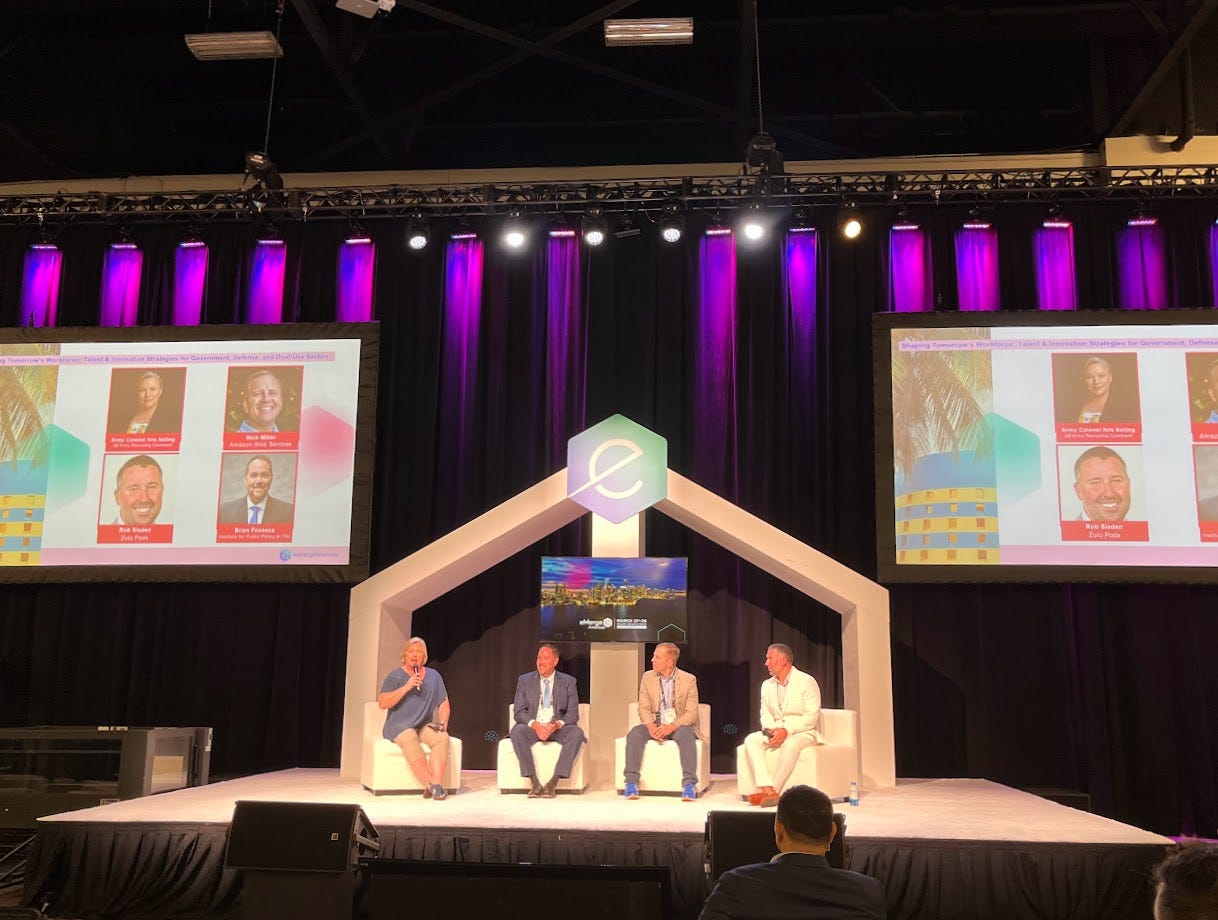
eMerge Americas has grown into one of the most genuinely interesting technology conferences in the country. We’re talking 25,000-plus attendees from more than 60 countries, over a thousand investors, and a program that spans AI and quantum computing, fintech, medtech, and a national security track that has expanded significantly in recent years. For a very good reason.
This year’s program goes beyond the main conference. The week starts on April 21 with NatSec Demo Day at Port Miami, a vetted, invite-only gathering of senior leaders from the Department of War, DHS, DoJ, federal, state, and local government, public safety, investors, and academia, watching live dockside demonstrations of dual-use technologies.
There’s the Army xTech Live Pitch Competition (I’m judging also!), a hackathon run by the University of South Florida, Army Research Lab, and AWS, and programming that brings together veteran workforce development with the kind of investor and industry conversations that actually move the needle.
This is not your typical trade show! It’s a working conversation about the future. And it’s happening in Miami. Which brings me to the part I actually want to talk about.
Florida, my friends, is not a punchline.
Let me address the thing that sometimes comes up when I tell people I’m based in Florida and have been for the past five years.
Why would you want to live there? they ask.
Isn’t that where people go to retire, enjoy the weather, hang out at theme parks and watch hurricanes approach on a radar app? That’s not where you go for serious work, or so they say.
They say the serious work happens in Washington, in New York, in Silicon Valley, and that everything south of Atlanta is just a nice place to hold a conference before flying back to somewhere that matters. And Florida Man. Come on. You have Florida Man.
Let’s talk about what else we have.
For one, did you know Florida is home to three Department of War combatant commands? SOUTHCOM, responsible for all of Central and South America and the Caribbean, is headquartered in Doral, in Greater Miami. CENTCOM, which covers the Middle East, Central Asia, and parts of South Asia, the most operationally active geographic command for the past twenty-plus years, is at MacDill Air Force Base in Tampa. SOCOM, the United States Special Operations Command, is also at MacDill. Three four-star commands. In one state.
That’s not a coincidence and it’s not just because we have nice weather and beaches and cost of living. Those commands are here because Florida is positioned at a strategic crossroads geographically, culturally, and in terms of pure energy. And the presence of these commands creates an entire ecosystem: defense contractors, intelligence community partners, academic institutions doing national security research, technology companies orienting their government practice around the relationships and access that come with proximity.
The University of Miami, Florida International University, University of South Florida, and the University of Central Florida all have significant research programs that intersect with national security, intelligence, cybersecurity, and emerging technology. The Florida university system is a talent pipeline and an R&D engine that feeds directly into the national security and technology ecosystem that surrounds it.
And I mentioned the energy. There’s the energy.
Miami specifically has a quality that I find genuinely difficult to describe to people who haven’t spent significant time there.
It is one of the most internationally connected cities in the Western Hemisphere. The conversations happening in Miami ballrooms and rooftop bars and conference floors aren’t just about American tech, they’re about Latin American investment flows, Caribbean stability, dual-use technology deployment in emerging markets, what the next five years look like for the hemisphere as China and Russia extend their influence southward and how we adjust accordingly.
These are operational conversations among people who are actually making decisions and deploying resources.
eMerge sits at the center of that ecosystem and it pulls from it beautifully.
When you walk the floor at eMerge, you are not in a generic tech conference bubble. You are in a room where a defense contractor is talking to a Miami-based startup that sells into Latin American governments, where a four-star’s staff officer is talking to a VC about dual-use applications, where a workforce developer from a Florida university is talking to a talent leader from a defense prime about what the pipeline looks like for the next generation of cleared technologists.
That’s what happens when you put a great conference in a city that has been quietly building serious infrastructure for serious conversations for decades. I’ve been dreaming about dropping a public-private partnership innovation hub here for years, and who knows? Maybe in the next few years, I can make that real. 🔥
The Nat-Sec Stage
The national security programming at eMerge has grown in scope and seriousness in recent years, and this year it’s more expansive than it’s ever been.
I’m genuinely excited to be on the stage in an emcee role, which is a different kind of presence than speaking or paneling.
Emceeing means being a through-line, making sure the conversations connect, the threads are visible, the audience leaves with something more coherent than a series of disconnected talks. It means being a translator between the practitioners who live in this space and the broader audience that is trying to understand it.
That’s a role I find meaningful right now, because the national security and technology conversation is at an inflection point that I think a lot of people outside the community don’t fully appreciate. And this is where I may have to remind you that while I talk talent and tech, I’ve been in the Army for 25 years, serving at the strategic level for close to 20 of those.
We are not in a slow, deliberate transition to AI-enabled defense. We are in a fast, often chaotic scramble to figure out how AI, autonomy, data, and digital infrastructure can be made useful at the speed that the threat environment demands without breaking the institutional, legal, and ethical frameworks that make it worth defending in the first place. The organizations that are making real progress on this are not waiting for consensus. They are prototyping, testing, iterating, and finding the partners who can move at their pace.
eMerge is a room full of those people. And Miami, with its defense access, its university ecosystem, its private capital, its connection to Latin America and the Caribbean, and its sheer density of people who take the intersection of technology and security seriously, is the right place for that room to exist.
Why this matters for YOU.
If you are in any way connected to the technology, talent, workforce, or innovation space, in government, in defense, in the private sector, in academia, the conversations happening in Miami are worth your time and attention, even if you can’t attend eMerge this year in person.
Watch what comes out of the NatSec track. Watch what the Army xTech competition surfaces. If you’re there, watch who is talking to whom in the hallways and at the side events and in the networking sessions.
The conversations happening in Miami the week of April 21–24 are producing relationships, contracts, pilots, and policy positions that will shape the next several years of how the United States and its partners approach the intersection of technology and security.
Florida is leading that conversation. Miami is hosting it. eMerge is the stage.
I’ll be up there, doing my small part to make sure the through-line is visible and the signal cuts through the noise.
If you’re going to be there, come find me! If you’re not, follow the news and the updates of attendees. This is a conversation worth tracking, and I’ll be posting follow-ups and insights next week, especially with what I learn at the AI and quantum hub!
Did a bit of a soft rebrand over the weekend, too, if you noticed! I had a chance to work with Jon Meadows finally and I absolutely love my new look!