
Signs You Need to Touch Grass
AI, cognitive debt, and why my best data scientists disappear into the woods on weekends.


I’ve noticed something interesting about my data scientists and software engineers.
All of them usually have some kind of hobby that takes them into a direct opposite world from how they work. And I’m talking about cabins in the woods, hiking the Appalachian Trail, endurance races of the kind of mileage that make me want to remind them that cars were invented for a reason. And there’s painting and poetry. They’re in part-time bands. One is totally into blacksmithing and makes the most amazing kitchen knives.
The big deal to me is that when I ask them what they do for fun, they describe activities that involve their bodies and brains and no screens.
I used to think it was just personality. That the wiring of the brain that makes folks good at the physical mechanics and detail of data science also draws them to physical, tactile hobbies as a rebound. So I’ve been thinking about these “opposite worlds,” and maybe, just maybe, that’s something we need to consider all the more as AI removes the busywork from our lives and leaves us with deep cognitive work.
Let’s decode it. 🚀
Opposite Worlds
Surviving the new mental load of AI

My business partners and I have a running group chat which, unlike our email, is where we share memes, articles, stuff crossing our minds, and is, IMHO, a brilliant look into our real minds via stream-of-consciousness and spur-of-the-moment inspiration. And lately we’ve been talking about all the research being done on burnout, cognitive fatigue, and the studies stacking up about what heavy AI use might be doing to our brains.
And I noticed something—we’ve been naturally rebounding from large amounts of AI use into activities directly opposite of screen time. I have a food blog, write fiction, and I’ve become one with the long bike ride. One of us reads poetry for ten minutes a day. Another is a big fan of rock climbing and hiking. Sometimes it’s making sure you manually do the things that are important for business, like writing emails or checking the balance sheets. But either way, these are “opposite worlds” from what we’re doing at work.
Nick Petrie, an executive coach who studies burnout in high performers, has been writing about this pattern for years. He calls these our “opposite worlds,” hobbies that put us into an exact opposite mental state from work. He kept finding these opposite worlds as a commonality between high functioning people who somehow sustain intense cognitive input year after year without imploding or falling into burnout. It wasn’t cognitive passive recovery, but more like exercising those complementary muscles in the brain the way you’re supposed to do with cross-training.
It’s not just about having hobbies, it’s about having hobbies that activate whatever cognitive and physical muscles that your work doesn’t. It needs to exercise your attention, your creativity, your focus, but also be sufficiently far from work that your brain actually gets the signal that it’s off the clock.
We’ve been working our way in and around burnout for years, but I think with the AI conversation we have going on right now, this concept has become urgent.
We’ve addressed burnout a lot over here on The Talent Code:

Why urgent?
AI is changing the way we work and the way we think. The routine cognitive tasks we used to do all day are increasingly being done by AI. While we celebrate not having to draft emails or make slides or structure reports from scratch, having an assistant to do first-pass research for us and work through the initial framing of an argument, those routine cognitive tasks weren’t just routine tasks—they were kind of a zen garden for our brains between heavy cognitive deep work.
Writing that email yourself forced you to organize your thinking and choose your words, think about your audience. Summarizing the document or the meeting made you reflect on what was important and what takeaways you wanted to share with others. Doing the first-pass research forced you to make your own patterns in your mind that would lead to hypotheses. Not a significant lift, but it warmed muscles that we’re just not warming now.
We’re going in without stretching into heavy lifting, which means we’re either going to burn out those muscles or we’re going to try to use AI to cheat the lift.
I read a study out of MIT published last summer that put 54 participants through four months of essay-writing sessions while measuring their brain activity with EEG. Some used ChatGPT, some used search engines, some just used their brains to write these essays. The ChatGPT group had the weakest neural connectivity out of the group, not surprisingly—they remembered the least about the essays they’d just different. And that persisted even after they stopped using AI.
In a separate study, Michael Gerlich at the Swiss Business School studied over 600 participants across age groups and found a similar pattern—frequent AI use resulted in decreased critical thinking and increased cognitive offloading. Higher education served as a partial protective buffer, but only partial.
I don’t feel like any of this is an argument to stop using AI (obviously, as a builder and teacher of tools, I love what kind of capability AI gives us) but it’s a warning to make sure we’re exercising our cognitive muscles to replace the functions that we’re replacing with AI.
All of the studies I’ve read make it clear that thoughtful use is different from lazy use, and the benefits are real when you use AI to augment what you’re doing, and not to completely replace it. Instead, it’s a muscle atrophy problem, and we have to figure out how to keep our cognitive tone.
This comes back to my data scientists who hike the Appalachian Trail and my business partner who thrives on rock climbing and hiking when she’s not at work.
Sabine Sonnentag, a German psychologist who has spent decades studying recovery from work stress, names four key recovery experiences that determine whether your off-hours are actually replenishing you:
Psychological detachment
Relaxation
Control
Mastery
Basically, are you able to get cognitively away from work in a way that is your own, under your control, and engages you in a challenging way.
The most important thing is detachment. Your body may be in the mountains but that doesn’t help you if your brain is still refreshing your email or your to-do list. This is what all my data scientists are after when they disappear into their cabins in the woods. They’re also looking for mastery, for directed attention, and in particular, directed attention that engages you in a very different way from work. One of my favorite studies in this area put a group of hikers through a wilderness immersion and gave them a standard creativity task before they left and on the fourth day of the trip. Their creativity scores went up by fifty percent.
The tricky part now is that the cognitive exercise we used to use to get away from routine work now has to be constructed deliberately to also augment the cognitive muscles that are atrophying when AI does our work. Our mental maintenance has to move from ambient to deliberate.
As we explore this, here are a few questions I’m asking:
What cognitive muscles is your work no longer exercising?
Do any activities in your life exercise those muscles instead?
If the answer is “none,” what could you introduce that does?
Does that activity involve nature (because the research is clear that at least some of our activity needs to involve touching grass)?
Is it far enough from work that your brain will get the benefits?
Are you protecting time for your cognitive workout?
Hint: reading books about your industry doesn’t count. Go find something in a different genre. An autobiography, a political thriller, an urban fantasy detective novel (judge me if you want, I love me some Harry Dresden).
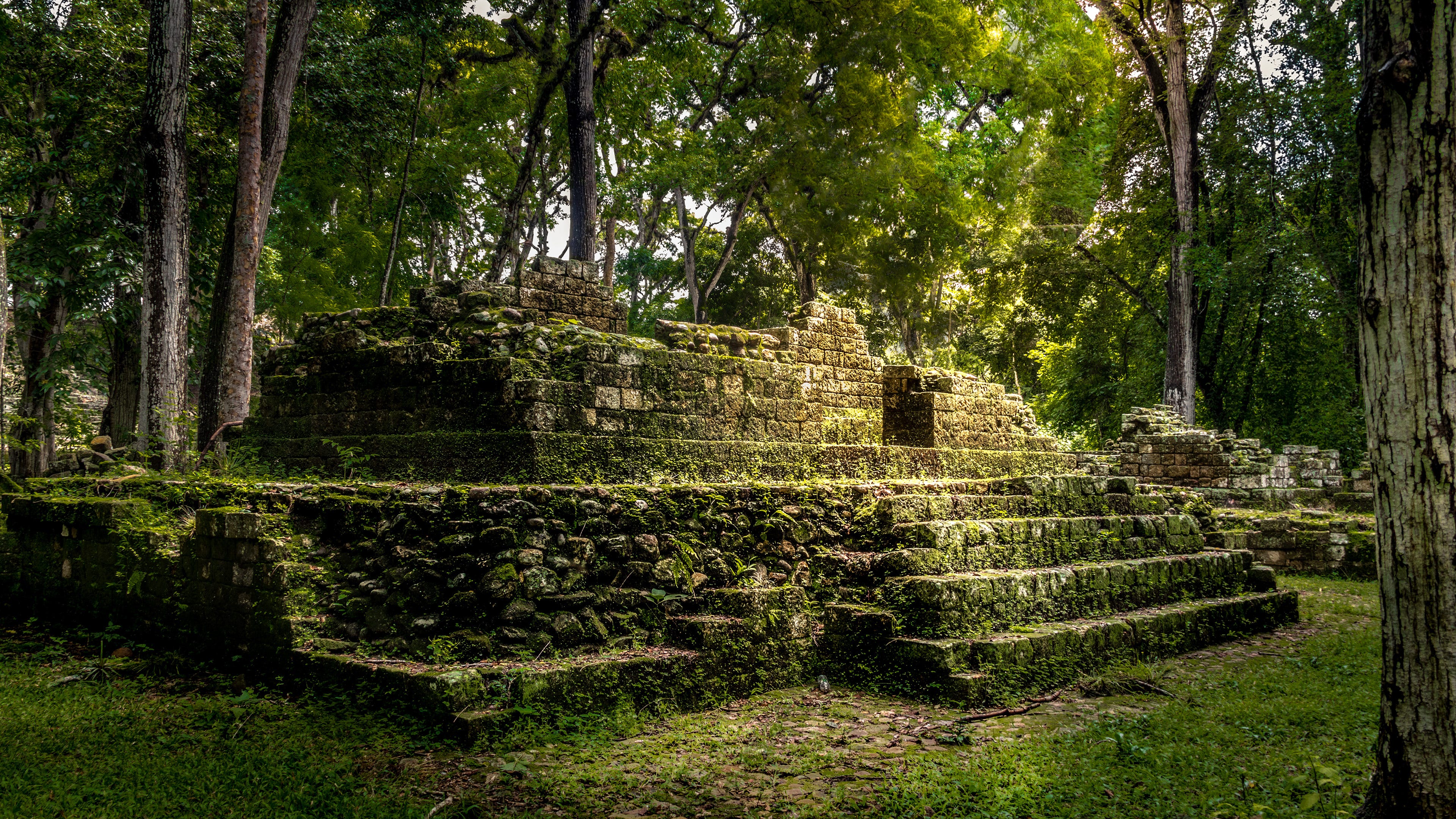
Did you know that even just looking at pictures of nature can help your mood?
Anyway, what I want you to think about after all this is that leading through the AI movement, using AI well and teaching your team to use AI well, involves a thoughtful look at what the change of work is doing to our cognitive capability and well-being. Are we protecting the parts of ourselves that we need to function at capacity and staying in cognitive shape? We need to consider that.
My opposite worlds are nature and the kitchen. I have to focus on them in a way I don’t focus at work and they stretch my creative muscles, problem solving, math, and a dozen other things. Yours are going to be different, but explore what those are and build them out. Because if you don’t, the research says that cognitive debt is going to come due, and it accrues even after you stop using AI.
Touching grass is important. Put it on your calendar.
I had a boss who told me to find a hobby—any hobby—as far from work as I could. He didn’t want overlap; he wanted distance.
I've been thinking about the life I’m building toward, and I really want a Sprinter van to provide the ability to work remotely to get after what he was / you are describing.