People First
A few things I learned about taking care of people in twenty-five years of military service

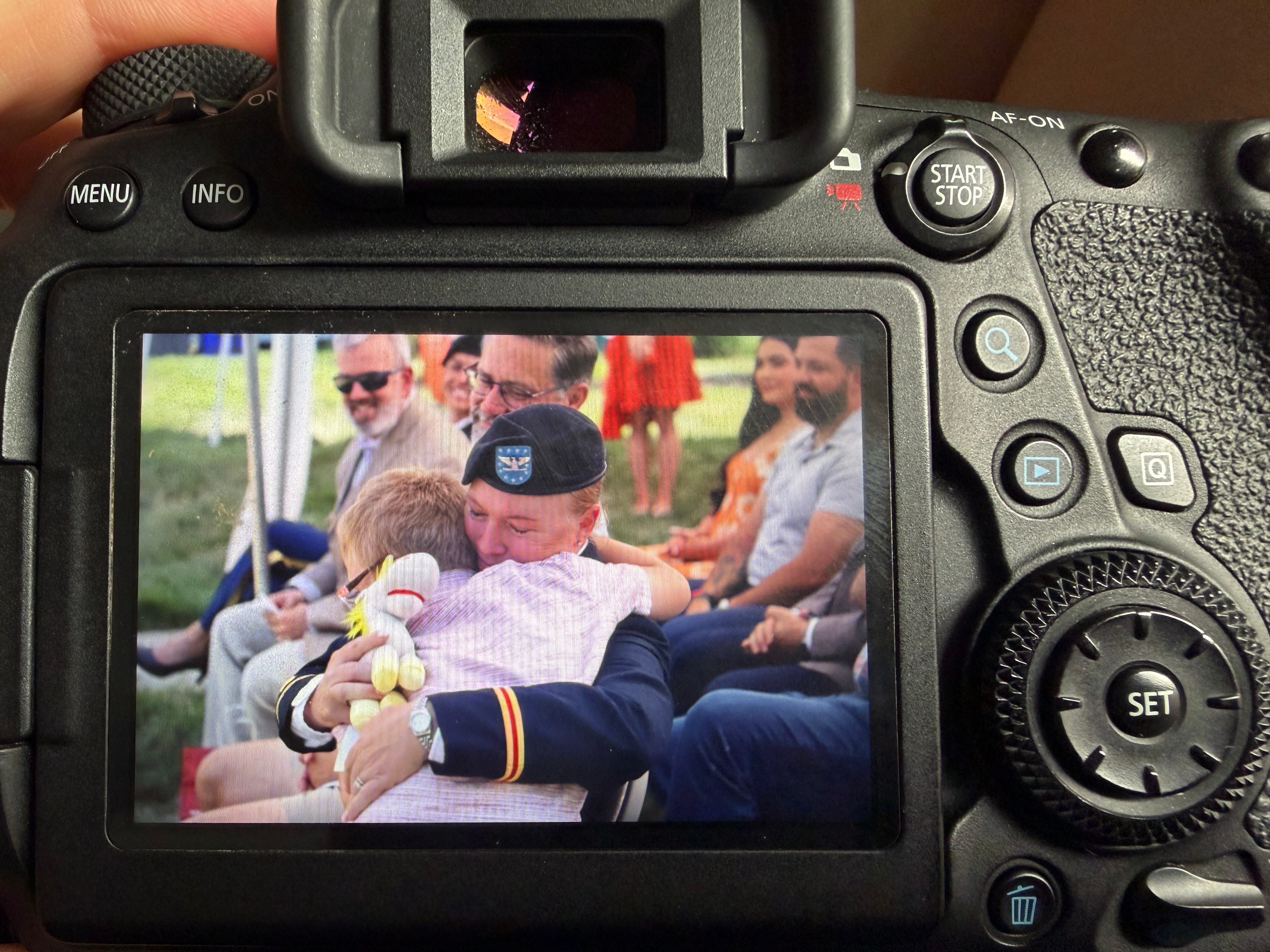
This past week contained a few milestones for me. One was holding a workshop for general and flag officers and senior executives on AI at Duke, one was teaching a data course for the Defense Civilian Training Corps, one was being able to catch up with friends and family that I haven’t seen in some time and hold one of my favorite kinds of party, which my husband calls a “bougie-que.”
Most of this centered around my retirement from the Army after twenty-five years of service.
This has been planned. I submitted my retirement at the earliest possible opportunity in summer 2024, when I came within the two-year window of being able to retire in grade as a colonel. I wanted to stay long enough to make a point and make some change, but retire before, well, one of the people out to get me succeeded.
My boss and mentor Dan said it well in his comments: You can tell a lot about a person by the quality of their friends and the quality of their enemies, and I have quality in both. He was kind enough to point out that some had moved from the enemy camp into the friend camp, but I also know that I simply managed to outlast some. Others were still very much there. So it’s time to make waves in different seas.
With that, I want to share a couple thoughts that I covered in my retirement remarks, things that have been rattling around in my brain for a while and I felt needed to be said. So here we go.
The lie and the truth of People First
A couple things I’ve learned about taking care of people

Nothing frustrates me more than hearing the military as an institution talk about “people first,” or even “mission first, people always.” Because it’s talking-point deep.
Every institution says it. “People are our greatest asset” or “We put people first.” It’s on websites and slide templates and printed on motivational posters someone stuck up in the break room or conference room.
But then the reorganization happens. The budget cuts happen. Awards aren’t processed and bonuses forgotten and “people first” becomes “well, they knew what they were signing up for” so fast it leaves marks.
But that’s the thing—institutions aren’t built to love people. They’re built to sustain themselves and achieve objectives. They optimize for continuity, compliance, and output. The humans in them, without intervention, are inputs to the system.
No policy fixes this. No mission statement fixes this. No enterprise initiative, no matter how well-designed, no matter how sincerely intended, actually solves the fundamental problem.
You cannot write a policy to create lifelong friendships.
You cannot issue a directive to build trust.
You cannot command the loyalty, the sacrifice, the phone call at 2 am, the colleague who goes to bat for you when the institution won’t, the leader who fights for your people even when it costs them something, the ethos that keeps us going.
You can’t. You cannot command people to care for each other. It cannot be ordered into existence.
What you can do, though, is lead it.
Taking care of people belongs not to the institution but the people who lead it.
To us. We have to choose it every single day. We have to decide that the people next to us are worth it. And we have to put it into practice.
I’ve seen what happens when people find the people who actually care. The ones who will take the call at all hours when someone is at their wit’s end trying to find that document or that packet or that person to help when helping means the difference between being able to take care of their families or not, between completing a move on time or not, between making the mission happen or not. I’ve seen the peers who notice when someone is struggling before anyone else does and step in to help. I’ve seen the leader who absorbs pressure from above so their team doesn’t have to feel it.
None of that happens because of policy or because it’s tracked in a system.
But all of it changes someone’s life.

What feels like an eternity ago, I was a firstie (senior) at West Point tutoring math for first years who weren’t quite getting it. I didn’t get through to all of them, but it was an amazing moment when I saw the light bulb go on. And I got a card at the end of the year from the Dean with a story in it that captured that feeling.
It started with a man, a tourist, walking along the beach at sunrise. The tide had gone out overnight and left thousands of starfish stranded on the sand, dying in the morning heat.
But then he saw another man, a local, walking the waterline, picking up starfish one by one and throwing them back into the sea.
He stopped. Watched for a moment. Then he asked, “What are you doing? There are thousands of them. You can’t possibly make a difference.”
The local picked up another starfish and looked at it. Then he threw it into the sea.
“Made a difference to that one.”
This is how the Army operates. We can’t change the tides, but we can change our starfish. There is probably a person in front of us who needs someone to notice them, who needs someone to advocate for them, to invest in them, to go slightly out of their way for them, because we decided they were worth it.
Because that person will remember. And they will do it for someone else. And that person will do it for someone else after that.
The thing is, we need to think bigger than just one starfish. Our Soldier Experience efforts were about that—finding the things that stranded our starfish and going after those. Maybe we can’t change the tides, but there are other things we can change to keep them from getting stranded in droves.
But we have to care enough about that to make it a priority and resource it.
I’ve been in the highest echelons of the Army, digging deep into the system, and I’m firmly convinced that without people at those highest echelons who care deeply about taking care of their people, growing them and training them and developing them and resourcing them and transitioning them, it becomes a bigger and bigger fight. The tide goes further and further out.
But if there’s someone at high echelon who can make a difference and does? That, my friends, has impact for years.
So here’s what I want to leave you with.
Think about your beach, whether you run a small team or the whole organization. Think about who might be stranded right now, someone who needs more than a policy, more than a well-meaning initiative, someone who needs your help to change something.
Who are your starfish?
Go throw them back. And even if you can’t change the tide, think about what you might change to keep more of them from getting stranded again.
After twenty-five years of service, I’m excited to be stepping into my next chapter over the next couple months as the Director of Workforce Transformation for Imagine Believe Realize (IBR), an amazing up-and-coming people technology company doing some incredibly creative work to take care of people in the federal sector. I’ll be leading how the company thinks about the future of work, still operating at the intersection of people and technology, and still believing humans are the point.
If this resonates, stay tuned for more here on The Talent Code on leadership, data, AI, and the very human work of building great teams and great organizations.
Thanks for your support, and looking forward to this new chapter!