Hard Work vs. Stupid Work
Balancing burnout, self-care, hustle culture, and work ethic


“Don’t label a generation lazy because they’re not willing to make the same sacrifices you did. Refusing to jeopardize your well-being for your boss is not an act of disrespect. It’s an expression of self-respect.”
I think I first started hearing this one as a West Point Cadet. “The Corps has.” Short for the Corps of Cadets has gone to hell. We weren’t working hard enough, we weren’t disciplined enough, it just wasn’t hard enough for us, the experience was ruined, West Point was ruined, and the end was nigh…you get the idea.
Similar complaints have run through both the Army and the workforce since I joined it as a new graduate. While the names have changed and the generations being disparaged as lazy have changed, the basic complaint is the same.
People just don’t want to work.
They don’t want to work hard.
This generation has no work ethic.
At the same time, as I design workforces, I look around and see people from all generations getting taken down by burnout, stress, and work-related health issues. I’ve wrestled with many of these myself and have watched friends do the same—usually while we’re all being told we don’t work nearly hard enough.
We’re still seeing hustle culture thrive—the idea that you need to work hard, long hours, and that on top of that, you need constant productivity and side hustles. That hobby of yours? Don’t let it just be a hobby, create courses and social media accounts for it. Jump on the gig economy. And as fast as people set reasonable boundaries at work, they fill the spare time with even more work, and, surprise, burn out.
So how do we set practical, sustainable boundaries around our time to maximize performance, prevent burnout, make money, prioritize self-care, and show our work ethic all at the same time? Is it even possible?
Let’s decode it. 🚀
Surge, Sustain, Recover
Building good training habits for work

The biggest problem with work is that we’ve baked a false choice between the grind and setting boundaries. You can do both.
There’s just a time and a place.
Human performance is and has always been cyclical. No elite athlete trains at maximum intensity every day. No marathon runner sprints the entire course (although with the times elite runners turn in, they’re pretty damn close). And no military unit can maintain surge tempo indefinitely.
Yet we try to design work as if people should operate at peak output, indefinitely, without rest, vacation, or recovery—and then act surprised when they burn out or quit.
The problem isn’t that people don’t want to work hard. They need a system, whether it’s one they develop or one you build, that makes it sustainable.
Coming back to the training example for elite athletes—this is where we see the cycles. Hard work. Capacity building. Active recovery. Cross-training. You can’t do the same thing every damn day and expect progress. You can expect injury.
To add a couple more thing to my ever-expanding list of odd jobs in and around my Army time (along with restaurant server and chef, radio DJ, and TV show recurring extra), after doing my time as a college athlete, I had the opportunity to both participate in the Army’s elite athlete program and train athletes as a strength coach.
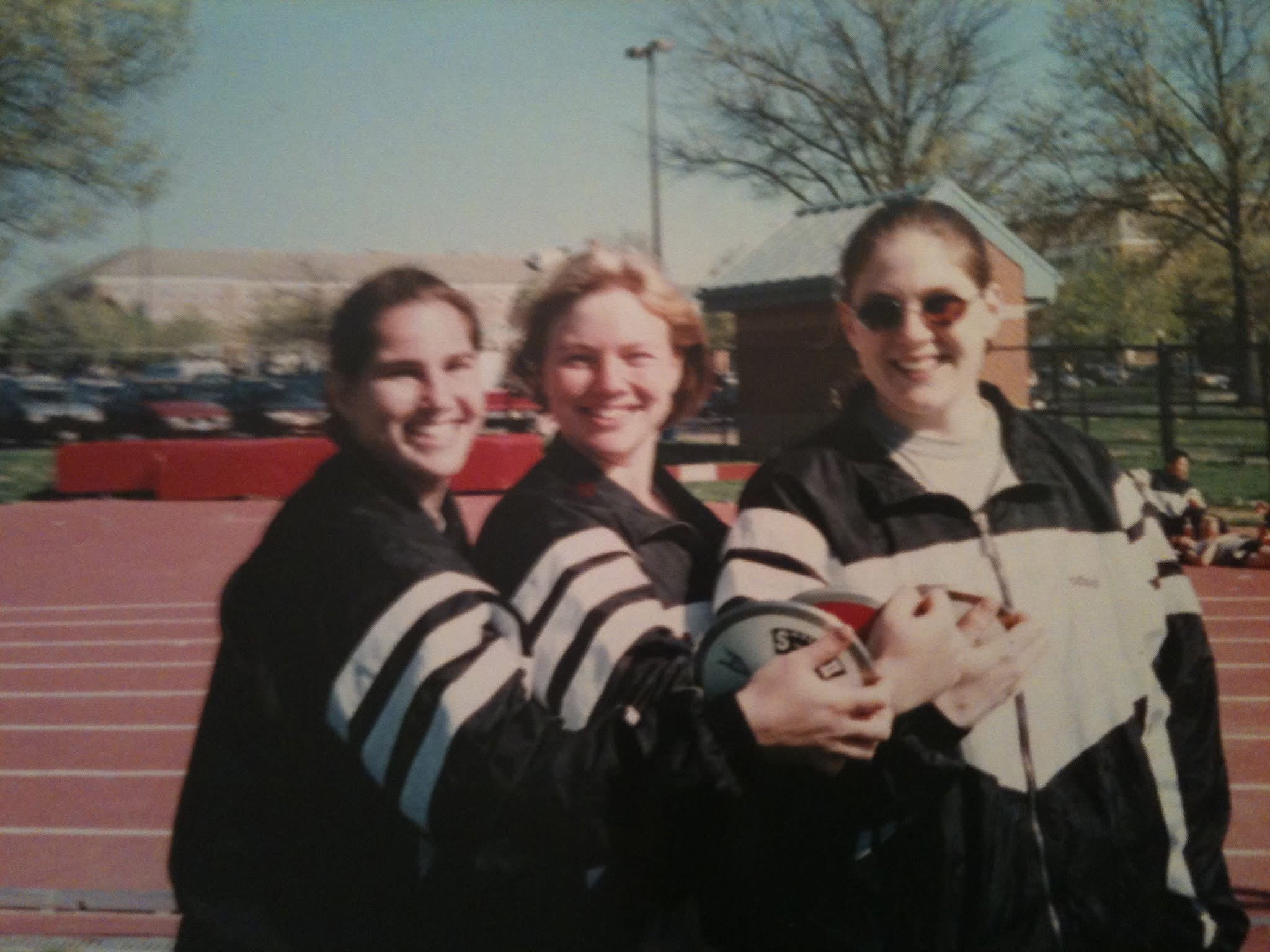
I designed my programs around a simple philosophy that works pretty well with other physical training—and other kinds of work as well—surge, sustain, recover.
Let’s talk about how this might work for work.
Knowing When to Surge
There are moments when intense effort is not only necessary but meaningful. A tight deadline, a crisis, a launch. A decision opportunity that won’t come again.
In those moments, you need people to surge. They want to surge—as long as the reason is clear and the outcome matters. Surge efforts create focus, camaraderie, and a sense of shared purpose. There should be lots of high fives at the end.
The problem we make is assuming that surge is a permanent operating mode.
In any system, human or otherwise, sustained overload leads to failure. In people, that failure looks like burnout, disengagement, illness, mistakes on the job, attrition. Not their failure, let me add, but the system’s failure.
Strong organizations don’t avoid surge, but they understand it is surge. They plan for it and they plan for what is needed afterward—sustainment and recovery.
Sometimes you need to take a knee. That’s not quitting, it’s resetting.
Finding the Pace You Can Hold
Endurance athletes understand something most organizations don’t—performance is about balancing rhythms, and not constant intensity.
We tend to think about sustainment the same way we think about surge—that it’s a permanent operating mode and it has one speed. But if you talk to endurance racers, it’s a very different thing.
The pace is an average. It’s a working rhythm that isn’t effortless, but sustainable. It allows you to recover without stopping and gain ground without surging. Sometimes, on flat ground, it looks like finding the groove and holding a steady pace, but a lot of the time, it looks like pushing to get ahead when you have an opportunity, like when you’re fighting up a hill, and using the back of the hill for momentum.
Not every day should feel like a sprint. Not every task should require peak cognitive output. Sometimes you need to push through a steady amount of work, maybe get ahead, maybe catch some momentum, and let that be enough.
A sustainable work rhythm allows people to alternate intensity, shift focus, engage different cognitive modes, and recover while still moving forward.
Working Rest
Did you know dolphins only sleep with one half of their brain at a time while the other is still active? I’m jealous. But the concept of a working rest is kind of like that.
Rest doesn’t necessarily mean stopping. Sometimes it just means changing how you work to allow for part of your cognitive function to rest.
I think of this a lot when I’m running long distance. In a marathon, I vary my stride and pace over time so that I’m using different muscles to move, and it lets me rest what’s sore. Just enough. Or there’s the Galloway walk-run method that operates on a similar principle.
Cognitively, if you’ve ever:
stepped away from heavy writing or coding to sketch ideas on a whiteboard
switched from hard math to diagramming a system
moved from deep analysis to conversation and sensemaking
shifted from execution to reflection
Then you’ve experienced working rest.
Different parts of the brain carry different loads. Switching modes allows one system to recover while another stays active. That’s cognitive sustainability.
Many workplaces make the mistake of treating all work as equivalent, and sometimes that means expecting people to stay in deep-focus, high-stakes cognitive modes all day, every day—even when those days are riddled with scattered meetings, all hands calls, and other concentration breakers.
That’s not how our brains work, and not how creativity, judgment, or insight emerge.
The Work-Rest Cycle
Your military and veteran friends know how to plan this, but I’m willing to bet that we’re all pretty awful at remembering to plan this for ourselves. That’s one of the reasons we’re prone to burnout.
Burnout doesn’t happen after one hard week, it happens after unbroken intensity.
Healthy systems have work-rest cycles built in:
periods of focus followed by recovery
intense projects followed by consolidation and development
delivery followed by reflection
In poorly designed systems, recovery is treated as an individual responsibility instead of an organizational one. People are expected to “manage their energy” inside structures that consistently drain it.
Leaders who care about performance must care about recovery as much as output, because one enables the other.
And while we’re on the topic of leaders…
Leaders are Not Exempt From Biology
I still remember talking to a friend who was at his general officer capstone course getting lectured by the doctors at a health visit built into the course (see? smart design), and he said, “We really are crappy at taking care of ourselves.”
Yeah. Because there’s a persistent myth that leadership requires self-sacrifice without limits.
We treat sleep like it is optional, meals get skipped, health checks get deferred, boundaries disappear.
We romanticize leaders who run them into the ground. And then we quietly replace them when they burn out, or point the finger at them saying they couldn’t hack it.
Leaders are human.
That guy who says he only needs four hours of sleep? Yeah, maybe. But he’s also looking twenty years older than he is, and that Hume pod he bought probably has plenty to say about his biological age.
The majority of adults need seven to nine hours of sleep per night to maintain optimal physical and mental health. Sleeping less than seven hours a night can lead to severe health problems. On top of that, sleep deprivation carries immediate and cumulative consequences for the body and brain. Driving while sleep deprived is as dangerous as driving drunk.
As a leader, you need sleep to make good decisions, food to think clearly, and recovery to lead effectively (because no one wants to deal with your tired temper tantrum).
Whatever lessons we take from ideas like “leaders eat last,” this doesn’t mean leaders don’t eat. Self-neglect is not servant leadership. It’s unsustainable leadership.
When leaders model exhaustion or exhaustive habits, they give their teams permission—or pressure—to do the same. But when they model good habits and good rhythms and healthy boundaries, they give their teams permission to perform sustainably.
Work Ethic is Important but Must Include Judgment
A strong work ethic is an asset when it is disciplined effort tempered with judgment. That means you know when to push hard, when to slow down, what matters most now, and protect your ability to show up continuously.
The important thing isn’t pushing back against work, it’s pushing back against pointless work. Your workforce has no interest in work that drains energy without creating value (you should be more suspicious of those who are okay with work like this than the ones who push back against it).
We also have to consider that the modern workforce is navigating different challenges and pressures than previous workforces. The always-on technology, cognitive saturation, signal fatigue, economic uncertainty (well, that might as well be a certainty if you look at history), difficult job markets, and higher expectations for meaning and impact. As long as these demands are competing for attention and focus, you have a doubly difficult task of keeping time and focus on deep work.
If you want sustained performance, here are some concepts to design for:
Where do you truly need surge?
Where have you unnecessarily normalized urgency?
Do your people know how to take a knee?
Are you varying cognitive load, or stacking it relentlessly?
Do you protect recovery after surges?
Do you model sustainable behavior as a leader?
Hell, are you employing these design principles in your own work as a leader?
Are you designing work for sustainability?
Many will tell you that work is a marathon, not a sprint. Yet we’re expecting our workforces to show up continuously sprinting. Yes, we want fast runners, but even the fastest runners need the flexibility to vary their pace, to surge, sustain, and recover accordingly. Find the pace you can hold, and vary the muscles you use along the way.
And finally…
As you’re doing all of this work design, make sure you’re sorting priorities. If everything is important, nothing is. That’s the biggest difference between hard work and stupid work. Hard work is a surge when it’s needed. Stupid work is working hard just for work’s sake—and nothing will lose you talent faster.
The future of work belongs to those who understand how humans actually perform, and who design cycles to allow high performers to perform at optimum, but also to sustain and recover when needed.
That’s not lowering a bar. That’s understanding that work is human, that human beings are not machines, and performance isn’t constant output, but a rhythm.
How are you finding your rhythm this week?
Leadership Questions for Sustainable Performance
Go through these questions, either by yourself or with your team, to see if there are any areas of workforce sustainability you need to work on!
1. Can you clearly name when a surge is required?
If everything feels urgent, nothing actually is. Surge should be intentional, time-bound, and tied to a real outcome.
2. Have you planned what happens after the surge?
Recovery doesn’t happen by accident. If you don’t protect it, it won’t happen. Repeat after me: calendar whitespace is okay.
3. Are people working hard—or just working long?
Long hours are a signal. Ask whether effort is producing value or just visibility.
4. Are you varying cognitive load, or stacking it all day?
Do people have space to shift between deep focus, creative work, reflection, and collaboration?
5. Do your best performers get recognition and relief—or just more work?
High performers burn out first in poorly designed systems. Don’t use your top producers as the “Easy” button.
6. Are you modeling the behavior you want to see?
If you never rest, neither will your team—no matter what you say.
7. Do people know when it’s okay to take a knee?
If slowing down feels risky, burnout is already baked in.
8. Are work–rest cycles treated as a system responsibility?
If recovery is left entirely to individuals to “work in when they have time,” the system is broken.
9. Are leaders sleeping, eating, and recovering?
Sustainable leadership requires a functioning human being. Being labeled a “leader” doesn’t free you up from the needs of biology.
10. Are you designing work for sustainability?
Winning the sprint doesn’t matter if you can’t finish the race.